



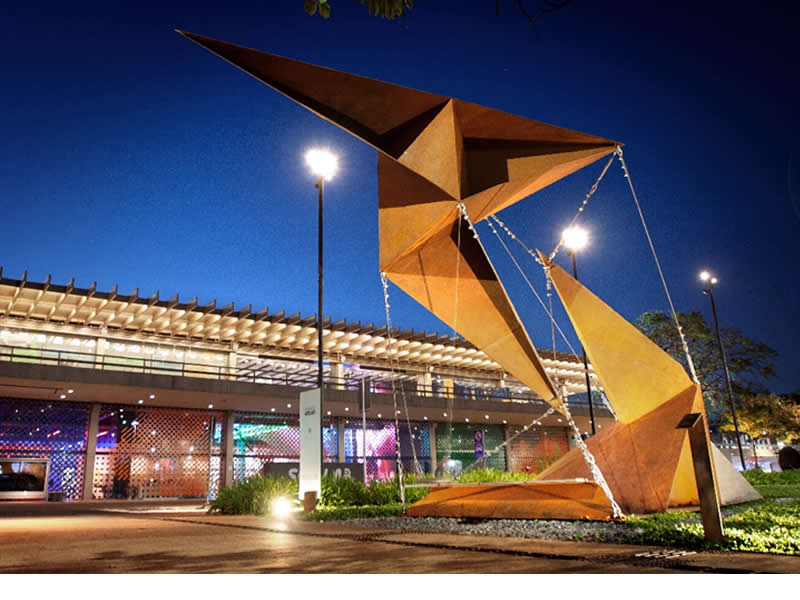
Seven tons of steel floating in the heart of Brasília: the physics and poetry behind “A Queda de Atlas” (The Fall of Atlas)
A monumental installation at SESI Lab (near the Metropolitan Bus Station (Rodoviária) combines cutting-edge engineering, optical illusion, and philosophy to invite a poetic pause amidst the fast-paced rhythm of the Eixo Monumental Avenue (Monumental Axis).
Those traveling along the Eixo Monumental in recent days have been captivated by a highly unusual sight in front of the SESI Lab. A massive geometric structure made of Corten steel and concrete—measuring 13 meters in length and weighing seven tons—appears to float gently just centimeters above the ground. With no visible pillars or traditional supports, the piece creates the distinct impression that gravity has been inverted, challenging the logic of passersby and prompting that inevitable second look.
This is “A Queda de Atlas” (The Fall of Atlas), a sculpture and new urban intervention conceived by architect, photographer, and visual artist Anderson Schneider. The “magical” visual effect that makes the colossal structure appear like a delicate piece of origami suspended in mid-air is no mere illusion; it is the result of meticulous calculations based on “tensegrity”—a structural engineering concept rooted in the static equilibrium between continuous tension and compression. The upper steel component rests on nothing; it is, quite literally, suspended upward, anchored to the ground by only nine thin, galvanized steel cables that seem to hold the sculpture down, preventing it from taking flight toward the heavens.
While the aesthetic impact is striking for its sense of lightness, the story behind its creation reveals a true saga of engineering and persistence. It took nearly three years of continuous work to bring the concept to life—a complex, multi-stage process that involved more than 20 professionals, including structural engineers, metalworkers, and concrete specialists. The logistics required to erect the monument involved operations worthy of a film, with heavy-duty crane trucks and specialized flatbed trailers navigating around the capital’s overpasses and overhead power lines. Ultimately, the math reveals the complexity of the undertaking: for every hour spent on physical assembly, 48 hours were dedicated solely to design and planning.
Yet, this bold engineering serves merely as a Trojan horse for a poetic and urgent reflection. The title invokes the Greek myth of Atlas—the Titan condemned by Zeus to bear the weight of the heavens on his shoulders—to draw a parallel with the “burnout society” (*Sociedade do Cansaço*) conceptualized by philosopher Byung-Chul Han. Schneider suggests that the contemporary Atlas does not carry the sky, but rather the deadlines, goals, expectations, and chronic self-imposed pressures of the 21st century. In a conceptual twist, the artist placed a simple swing directly beneath the shadow of this looming, menacing mass. The invitation is both irresistible and paradoxical: to sit on a light, airy swing beneath a colossal structure that appears to float, transforming the crushing weight of daily life into a moment of pure reverie and suspension.
The mind behind this monument is as multifaceted as the work itself. A graduate of the Faculty of Architecture and Urbanism at the University of Brasília (FAU-UnB), Anderson Schneider built a robust career in international photojournalism—covering armed conflicts in Iraq and the devastating earthquake in Haiti—before shifting his focus toward architecture and the immateriality of space. Currently balancing his role in the Architecture Department of the Supreme Federal Court with his work as director of Estúdio Monada, Schneider has gifted Brasília an interactive landmark that serves as both a physics lesson and a balm for the soul. Made possible by the Federal District Culture Support Fund (FAC/DF) and sponsored by Pinheiro Ferragens, the work remains on display for free—open to anyone who wishes to defy gravity and, for a few minutes, set the weight of the world aside.
Sculpture “A Queda de Atlas” (The Fall of Atlas) by Anderson Schneider
Location: Open air area of SESI Lab (Setor Cultural Sul, Brasília – DF)
Visiting until December: Open to the public and free of charge.
Instagram: @aquedadeatlas


